

Celebrating the World Lizard Day
Live young, stunning camouflage, stealthy stillness.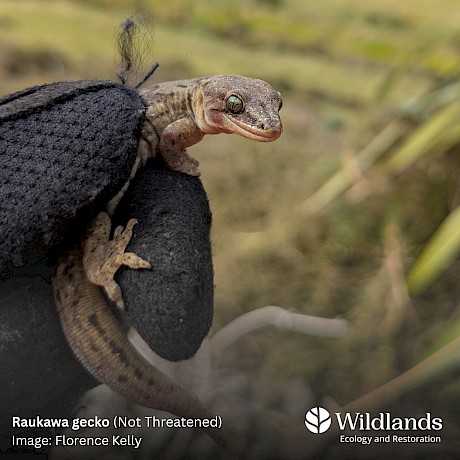
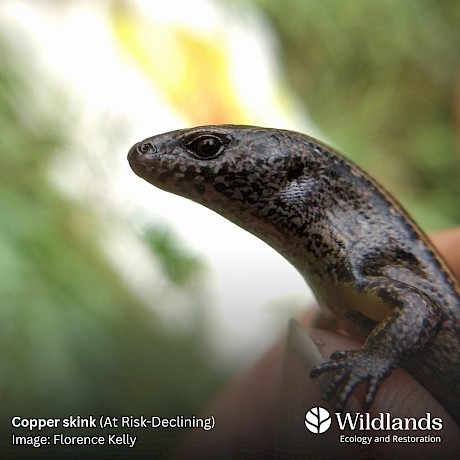
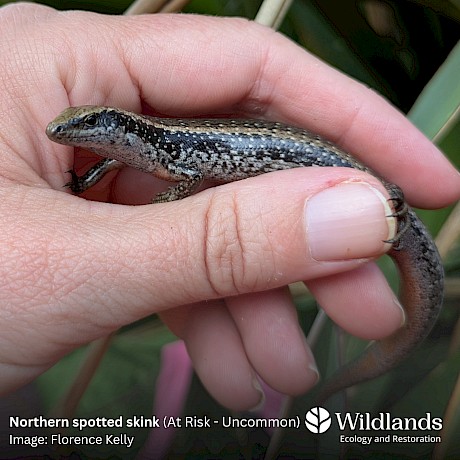
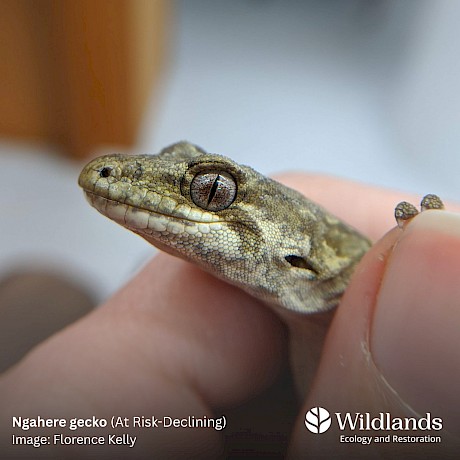
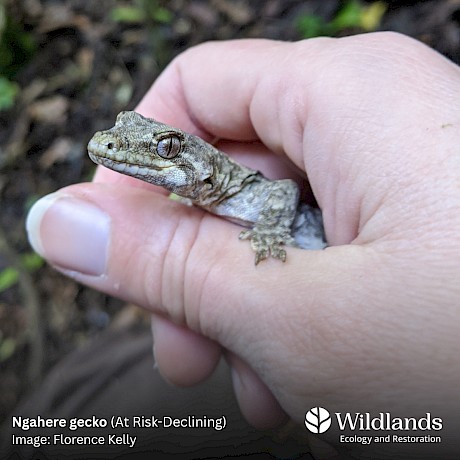
August 14th is World Lizard Day and to celebrate the day the Wildland Consultants Ltd team are bringing you some lizard fast facts.
New Zealand has 149 species of gecko and skink. Usually, it’s easy to distinguish a gecko from a skink. Geckos have loose, baggy skin and large, beautiful, unblinking eyes, while Skinks can blink, and have small shining eyes and smooth skin.
Lizards are both predators and prey within Aotearoa ecosystems and are important pollinators and seed dispersers too.
Before the introduction of pest mammals, our lizards were mostly eaten by birds, tuatara, and other, bigger lizards. As these predators rely on sight to find their lizard prey, over evolutionary time, New Zealand’s native lizards became very good at hiding in plain sight. Aotearoa lizards are the masters of camouflage. They are able to keep very, very still and have astonishingly beautiful patterns and colours that make them very hard to see against the vegetation in their habitats.
Unlike many lizards overseas, our native lizards nearly all give birth to live young. Only one native lizard lays eggs – the aptly named Egg-laying skink – which only lives on a handful of offshore islands and on the east coast of the northern North Island.
Many of our lizards have very small, localised distributions and the species can be tricky to tell apart physically. This means that a decision was made early on to legally protect all of our native lizards under the Wildlife Act (1953). With only five of our currently 149 known lizard species not threatened, those that remain are critically important to our ecosystems. Because of this, a Wildlife Act Authorisation (WAA) is required before lizards, or their habitats, can be disturbed.
Unfortunately, unlike their natural predators, pest mammals like rats can use their sense of smell to easily locate and prey on our lizards. Hiding in plain sight and keeping still does little to protect you from a hungry, keen-nosed mammal.
To help protect our lizards, control of pest mammals is incredibly important, especially when translocating lizards into new areas as part of a lizard management plan.
Habitat loss is another threat to lizards, and so when lizards are translocated during development projects, additional habitat is created to help the lizards settle in and survive long term.
Wildlands have six full-time herpetology specialists along with several experienced and skilled lizard field ecologists. Our herpetology team, and all of us, would like to wish you a happy World Lizard Day. Please don’t hesitate to get in touch with them for your lizard ecological management needs.
Team Wildlands.
[Enable JavaScript to view protected content]
#worldlizardday #ecologicalconsulting #restorationandecology #thatswild #wildlands
Posted: 14 August 2026