
Wildlands Celebrating 40 Years: 1985 – 2025
  • Company
    • News
    • Newsletters
    • Brand story
    • Our values
    • Reports and Other Outputs
    • Awards
    • Links
    • Health, Safety and Environment
    • The Wildlands Logo
    • Copyright
    • Rotorua Botanical Society
  • People
  • Services
    • Assessment of Ecological Effects (AEEs)
    • Biosecurity
    • Ecological Evaluation
    • Ecosystem Restoration & Rehabilitation
    • Fauna Surveys & Monitoring
    • Freshwater & Estuarine Wetlands
    • Indigenous Ecosystem Processes
    • Indigenous Revegetation
    • Mapping & GIS Services
    • Monitoring Design & Implementation
    • Offshore Islands
    • Pacific Islands
    • Strategic Advice
    • Sustainable Farm Planning
    • Threatened Species
    • Vegetation & Habitat Surveys
    • Weeds
    • Plant for Good
  • Projects
  • Careers
    • Current vacancies
  • Contact

News

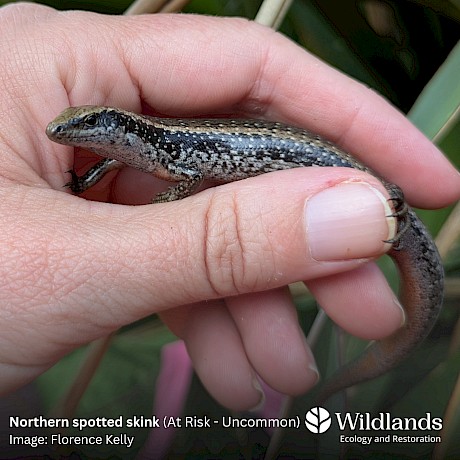
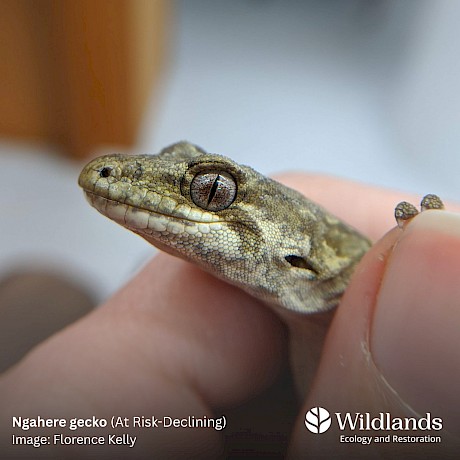
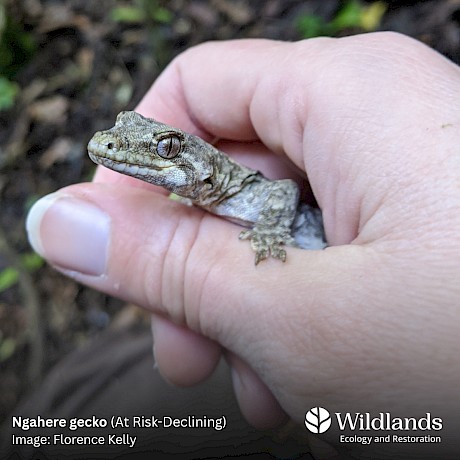
Celebrating the World Lizard Day

Live young, stunning camouflage, stealthy stillness.
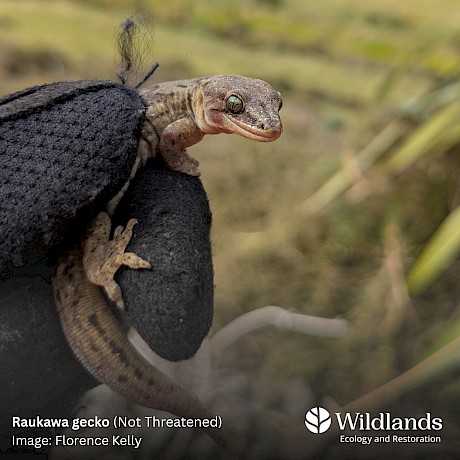
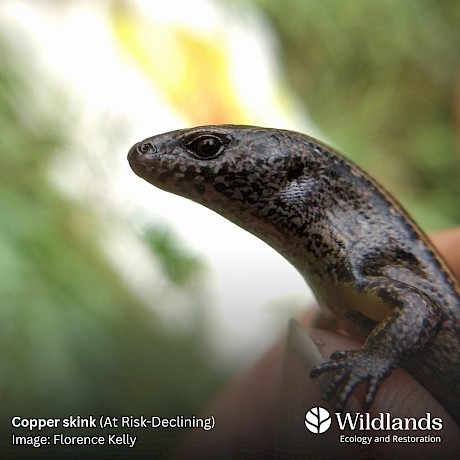
August 14th is World Lizard Day and to celebrate the day the Wildland Consultants Ltd team are bringing you some lizard fast facts.

New Zealand has 149 species of gecko and skink. Usually, it’s easy to distinguish a gecko from a skink. Geckos have loose, baggy skin and large, beautiful, unblinking eyes, while Skinks can blink, and have small shining eyes and smooth skin.

Lizards are both predators and prey within Aotearoa ecosystems and are important pollinators and seed dispersers too.

Before the introduction of pest mammals, our lizards were mostly eaten by birds, tuatara, and other, bigger lizards. As these predators rely on sight to find their lizard prey, over evolutionary time, New Zealand’s native lizards became very good at hiding in plain sight. Aotearoa lizards are the masters of camouflage. They are able to keep very, very still and have astonishingly beautiful patterns and colours that make them very hard to see against the vegetation in their habitats.

Unlike many lizards overseas, our native lizards nearly all give birth to live young. Only one native lizard lays eggs – the aptly named Egg-laying skink – which only lives on a handful of offshore islands and on the east coast of the northern North Island.

Many of our lizards have very small, localised distributions and the species can be tricky to tell apart physically. This means that a decision was made early on to legally protect all of our native lizards under the Wildlife Act (1953). With only five of our currently 149 known lizard species not threatened, those that remain are critically important to our ecosystems. Because of this, a Wildlife Act Authorisation (WAA) is required before lizards, or their habitats, can be disturbed.

Unfortunately, unlike their natural predators, pest mammals like rats can use their sense of smell to easily locate and prey on our lizards. Hiding in plain sight and keeping still does little to protect you from a hungry, keen-nosed mammal.

To help protect our lizards, control of pest mammals is incredibly important, especially when translocating lizards into new areas as part of a lizard management plan.

Habitat loss is another threat to lizards, and so when lizards are translocated during development projects, additional habitat is created to help the lizards settle in and survive long term.

Wildlands have six full-time herpetology specialists along with several experienced and skilled lizard field ecologists. Our herpetology team, and all of us, would like to wish you a happy World Lizard Day. Please don’t hesitate to get in touch with them for your lizard ecological management needs.

Team Wildlands.

[Enable JavaScript to view protected content]

#worldlizardday #ecologicalconsulting #restorationandecology #thatswild #wildlands

Posted: 14 August 2026
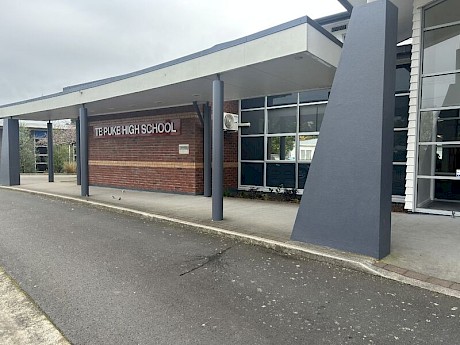
Wildlands at Te Puke High School’s STEM careers expo

Connection and community are important values for our staff Wildland Consultants Ltd, and that couldn’t be more true for our Bay of Plenty Senior Freshwater Ecologist Dr Meredith Davis.

Meredith is deeply committed to collaborative community engagement and to educating the next generation of ecologists on the environmental issues Aotearoa faces.

Alongside holding - and continuously developing - her expertise in freshwater and catchment ecology, metagenomics, and microbiology, Meredith regularly volunteers for Te Puke High School by running their year 12 freshwater science field trip. She does this in partnership with Janie Stephenson and the Maketū Wetlands education team.

For the last few years, Meredith, along with education partners at Maketū Wetlands, Massey University, Toi Ohomai, and other consulting firms has also been attending Te Puke High School’s STEM careers expo. The Expo is organised by one of Te Puke’s dedicated science teachers, Kirsty Buchanan.

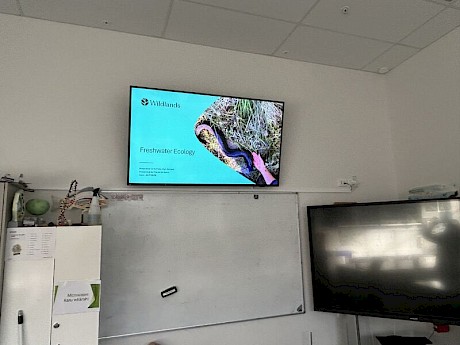
Meredith provoked much student interest at this year’s expo by taking in an aquarium full of live macroinvertebrates and through speaking with the students about all the different career pathways available for getting into ecology and restoration at Wildlands.

Meredith told us that students were excited by all the entry routes available for early career ecologists, which includes no university training or prior work experience, through to Toi Ohomai and/or entire university degrees with or without post-graduate qualifications.

Meredith said, “our young adults want options. Not everyone wants to follow the traditional pathway to a career in ecology. I connect with this view and although I have achieved a terminal degree (PhD), my career path has been anything but traditional. I like to remind students that there is no single pathway and every experience provides opportunities to learn marketable skills. I encourage students to volunteer and try to find something they truly enjoy doing.

Te Puke High School’s students and teachers are so engaged and passionate. I always look forward to working with them! It was also great to reconnect with other professionals and educators and hear about their exciting work.”

No doubt you’ve made a huge positive impact Meredith, and thank you for sharing your reflections on your inspiring day with the student here with us.

Te Puke High School’s Kirsty Buchanan put it beautifully, “Your participation is invaluable in inspiring our students and demonstrating the diverse career paths that STEM knowledge and skills can open up”.

Team Wildlands.

#ecologyandrestoration #ecologicalconsulting #wildlands #thatswild

Posted: 12 August 2026

Geothermal Vegetation of the Waikato Region has now been published and is available for download:

Geothermal vegetation of the Waikato region, 2023 | Waikato Regional Council

Posted: 13 June 2025

Te Atiawa Stream Fish Life Points to a Brighter Future

https://www.kapiticoast.govt.nz/council/news-and-information/news-and-stories/2025/march/te-atiawa-stream-fish-life-points-to-brighter-future/

Posted: 25 March 2025

State Highway 3 Lizards

https://www.thepost.co.nz/nz-news/360604324/skills-needed-catch-along-state-highway-3

Posted: 10 March 2025

Prev page
Page 1 of 5
Next page

In this section

  • Company
    • News
    • Newsletters
    • Brand story
    • Our values
    • Reports and Other Outputs
    • Awards
    • Links
    • Health, Safety and Environment
    • The Wildlands Logo
    • Copyright
    • Rotorua Botanical Society
      • Publications
      • Newsletters
      • Field Trips
      • Membership Form
      • John Nicholls Memorial Research Grant
Providing outstanding ecological services to sustain and improve our environments
Wildlands: Ecology and Restoration Westpac Rotorua Business Excellence Awards Supreme Winner Toitū Enviromark Diamond Ekos Zero Carbon Pest-Free Partner

[Enable JavaScript to view protected content]

Call free: 0508 945 369

© 2026 Wildland Consultants Ltd
Website by RS

  • Home
  • Company
    • News
    • Newsletters
    • Brand story
    • Our values
    • Reports and Other Outputs
    • Awards
    • Links
    • Health, Safety and Environment
    • The Wildlands Logo
    • Copyright
    • Rotorua Botanical Society
      • Publications
      • Newsletters
      • Field Trips
      • Membership Form
      • John Nicholls Memorial Research Grant
  • People
  • Services
    • Assessment of Ecological Effects (AEEs)
    • Biosecurity
      • Pest Animals
    • Ecological Evaluation
    • Ecosystem Restoration & Rehabilitation
    • Fauna Surveys & Monitoring
      • Aquatic Fauna
      • Bats
      • Birds
      • Lizards & Frogs
      • Terrestrial Invertebrates
    • Freshwater & Estuarine Wetlands
    • Indigenous Ecosystem Processes
    • Indigenous Revegetation
    • Mapping & GIS Services
    • Monitoring Design & Implementation
    • Offshore Islands
    • Pacific Islands
    • Strategic Advice
    • Sustainable Farm Planning
    • Threatened Species
    • Vegetation & Habitat Surveys
    • Weeds
    • Plant for Good
      • Riparian Indigenous Planting
      • Shelterbelts
      • Woodlots/forestry
  • Projects
  • Careers
    • Current vacancies
  • Contact